
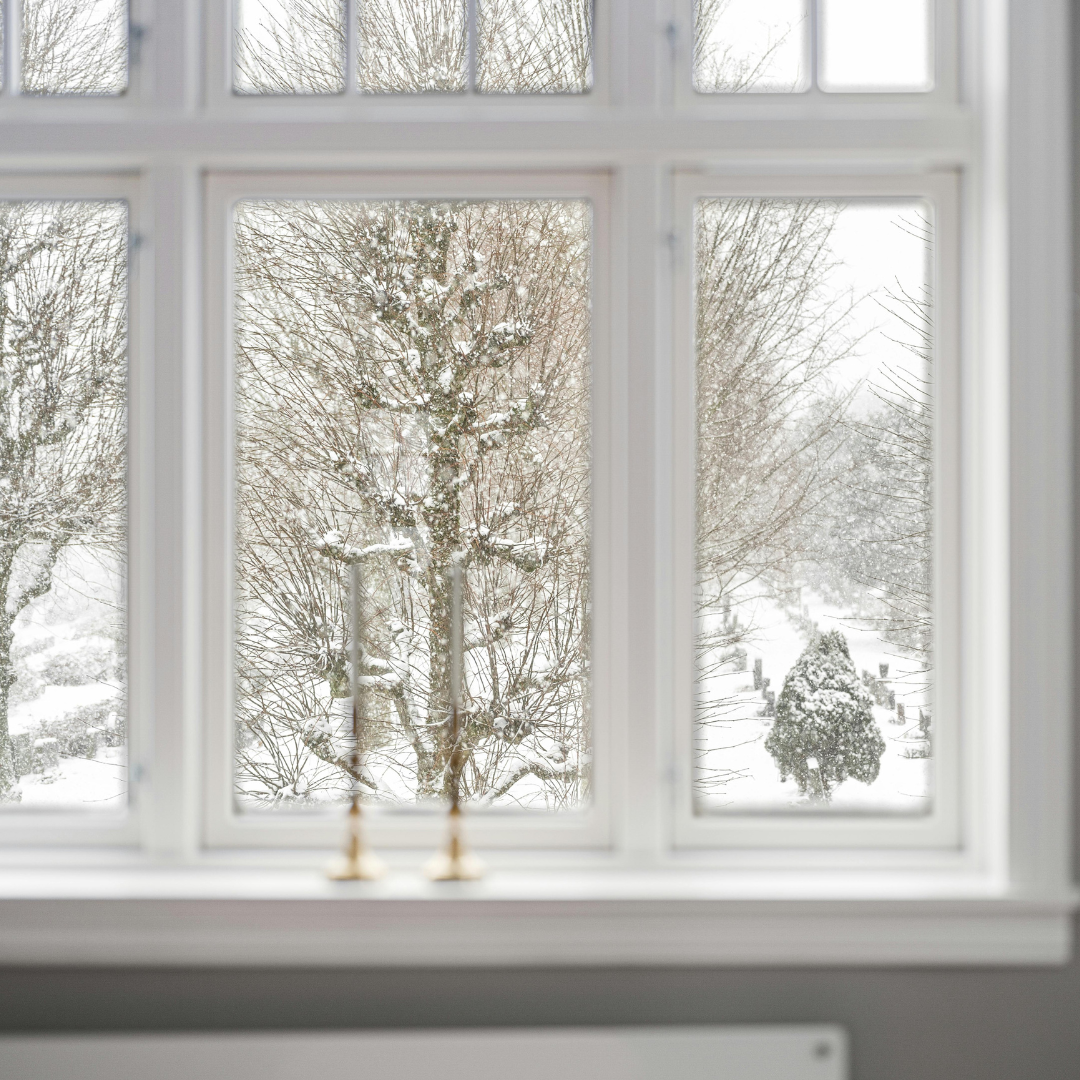
Happy New Year, albeit a late one! I’ve always felt that January is meant for rest and quiet planning, a time to gently shape yourself into the new year, while February carries the weight of action. This January embodied that rest in every sense, softened by frequent snow days and a slower pace that invited reflection. I decorated my home for the winter months as a way to preserve warmth and coziness, lining the windows with snowflakes and draping soft silver and blue ribbons along the walls. Beyond the decor itself, we are lucky enough to have the most wonderful view of all: snow dancing across the Manhattan skyline, tracing the pale blue arc of the RFK Bridge stretching quietly in the distance. As we slow into February, it also happens to be my anniversary month, marking when my partner and I were blessed with our nikkah. This quiet and reflection that winter brings reminds me of my first months (a few years ago) as a homemaker.
I’ve come to believe that the art of homemaking is a lost one- in both practice and understanding. Growing up, I would have scoffed at the idea of dedicating myself to the home, especially after all the hard work I could put into an education or career instead. I absorbed the notion that to live a fulfilled life as a woman in modern society meant earning a degree, joining the hustle of corporate life, and returning home only to sleep, wake, and repeat. Yet recently, after returning from a work trip in Chicago, I was struck by how peaceful home felt, and I realized that that peace came from homemaking.
Homemaking does not mean abandoning your passions or dreams; rather, it is the work of creating steadiness in a world that often feels disconnected. Amid the noise of notifications, deadlines, and endless responsibilities, it is in the rhythms of home- folding laundry and anticipating the comfort of clean clothes, cooking a meal and seeing food as an opportunity for nourishment, or simply lighting a candle as part of a quiet routine- that we reconnect to ourselves. For me, homemaking brings structure not as rigid rules, but as gentle, predictable rhythms. It is this rhythm that fosters belonging: the assurance of consistency, of knowing what to expect in a place where you can truly rest.
I think it’s time to reimagine homemaking as something anyone can participate in, a way of creating a space of comfort and predictability. It is the simple, consistent acts that make a home feel safe: having a clean living environment, nourishing food readily available, or a cozy corner to unwind. Thinking about this brings me back to my own childhood. I remember coming home from school to my mother greeting me at the front door with a snack (usually some sort of sliced fruit), knowing that dinner would be at a certain time, and taking my shoes off to help keep the house tidy before sitting down to study while she cooked.
I took for granted the clean clothes I would always have, the playful moments we shared, and the gentle care in every step she took each day: vacuuming, tidying, chopping fresh vegetables, washing fresh fruit, folding and arranging our clothes, preparing meals, and balancing our schedules with her sharp precision (and if you know my mom, I’m sure you would agree). I say sharp precision because that is exactly what it was. No one applauded her for getting the laundry done, or for chopping vegetables to make our daily salad, or for any of the countless tasks she completed. It was all done quietly, perfectly, and without notice. Looking back, what a wonderful gift to give a child: consistency, the assurance that this is where you belong, and the comfort of knowing someone is always there for you.
Yet there is a loneliness in homemaking that I’m sure many of us have felt, whether we work or care for a home full-time. It can be isolating, and sometimes the work seems never-ending. You wash the dishes, only to find the sink full again a few hours later. You vacuum, and soon the floor feels cluttered once more. You fold the laundry, only to see socks scattered across the room. I remember wondering, does any of this really matter? One of the most freeing lessons I learned was that homes are not meant to be perfect all the time. In fact, it’s even okay to lower the bar for hospitality. We aren’t meant to do this alone; homes were once close to one another, with neighbors or loved ones dropping by frequently. Inviting others over (even if the floor isn’t spotless or the dishes aren’t all done) brings warmth and love into a space. Homes heal when they open, and connection matters far more than perfection. Extraordinary things often emerge from ordinary homes, because the world is shaped by what happens there: by the people who keep showing up, day after day, and make home a place of consistency, care, and love.
Perhaps the most important lesson homemaking teaches is love: showing up, day after day, even when no one notices. It is through this love that humility and patience are cultivated, learning that a task may go uncelebrated, yet it is done well, with care. Homemaking should be reclaimed as an art; it should not be seen as inferior work. It teaches planning and management, problem-solving, and emotional intelligence. In that regard, homemaking is leadership, and leadership does not require an audience. From each meal you prepare, to every rhythm you maintain, to every act of care you give, this is how homes become places of peace and a haven of stability in a chaotic world. This is how culture is preserved, how love is passed down, how ordinary days shape extraordinary lives- one ordinary act at a time.